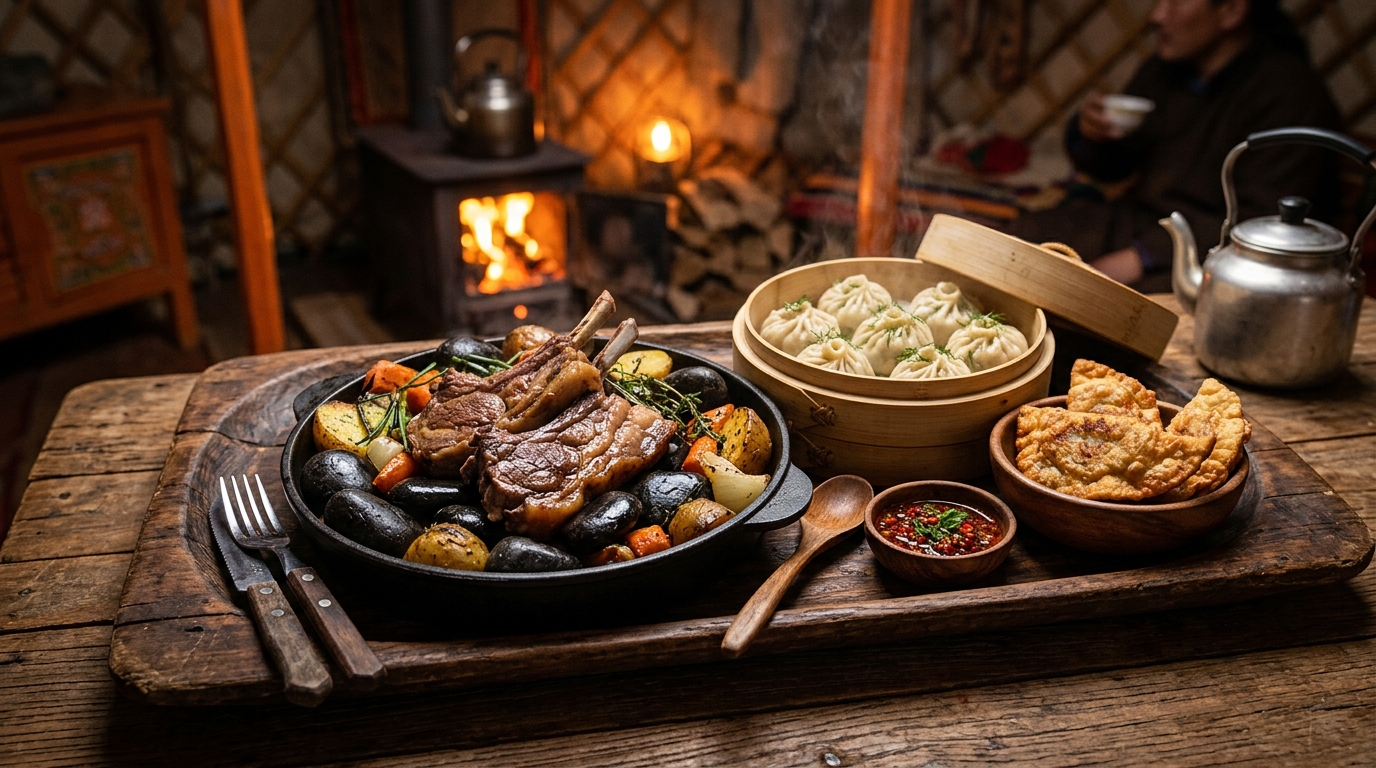
Cooking With Fire and River Stones on the Steppe
Do not confuse western "Mongolian Beef" or "Mongolian Grill" (which were actually invented in Taiwan in the 1950s) with genuine nomadic cuisine! In Mongolia, true celebratory cooking centers on two legendary feasts reserved for honored guests: Khorkhog and Boodog.
1. Khorkhog (Хорхог) — Pressure-Cooked Mutton with Red-Hot River Stones
Khorkhog is the ultimate communal countryside feast. Here is how nomadic families prepare it:
- Smooth, fist-sized river stones are heated directly inside an open fire or stove until they glow red-hot.
- Inside a heavy metal milk churn or pressure cauldron, bone-in cuts of free-range grass-fed sheep or goat are layered alternatingly with the glowing stones, whole potatoes, carrots, onions, garlic, salt, and black pepper.
- A splash of water is added, the lid is sealed tight, and the cauldron sits over the fire for 60 to 90 minutes.
- The superheated stones sear the fat from the inside while steaming the meat in its own juices, producing fall-off-the-bone tenderness with a smoky mineral aroma.
Why Locals Hold the Hot Stones
When the Khorkhog is opened, the host hands each guest one of the slick, warm black river stones removed from the pot. Mongolians toss the hot stone from palm to palm—believing the heat and natural oils stimulate acupressure points in the hands, improve blood circulation, and relieve travel fatigue.
2. Boodog (Боодог) — Cooking Without a Pot
Even older than Khorkhog is Boodog, traditionally prepared with goat or marmot. The animal is carefully deboned through the neck without piercing the hide, stuffed with red-hot river stones, onions, and salt, tied shut at the neck, and roasted from both the inside and outside using a blowtorch or open flame. The result is an unforgettable, deeply savory delicacy of the steppe.