Why Mongolia Is Unlike Anywhere Else on Earth
Stretching across 1.56 million square kilometers between the Siberian taiga and the Gobi Desert, Mongolia is the world's most sparsely populated sovereign nation—and one of its last true frontiers of nomadic civilization. Whether you are planning your first expedition or fascinated by Central Asian heritage, here are 12 extraordinary facts that define the Land of the Eternal Blue Sky.
1. Over 250 Sunny Days Every Year
Mongolians call their homeland "Mönkh Khökh Tengeriin Oron"—the Land of the Eternal Blue Sky. Thanks to its high continental elevation (averaging 1,580 meters above sea level), Mongolia enjoys more than 250 cloudless, sun-drenched days each year.
2. Horses Outnumber People
With a human population of roughly 3.5 million and an estimated 4.8 million horses (alongside over 60 million head of livestock across the "Five Snouts"—horses, camels, yaks/cattle, sheep, and goats), horses remain the lifeblood of steppe culture.
3. The World's Oldest National Park Is in Ulaanbaatar
Long before Yellowstone was established in 1872, the Qing government and Mongolian Buddhist leaders officially protected Bogd Khan Mountain south of Ulaanbaatar in 1778 (with sacred decrees dating back to the 12th century), making it the oldest legally protected nature reserve on Earth.
4. Dinosaur Eggs Were Discovered Here for the First Time
In 1923, American explorer Roy Chapman Andrews led an expedition into the Flaming Cliffs (Bayanzag) in the Gobi Desert and uncovered the world's first scientifically confirmed dinosaur eggs, along with fossils of Velociraptor, Oviraptor, and the famous "Fighting Dinosaurs."
5. Home to the World's Only Desert Bear (Mazaalai)
Deep inside the Strictly Protected Great Gobi Area lives the Mazaalai (Gobi bear, Ursus arctos gobiensis), the only bear subspecies adapted to survive in scorching desert conditions. Fewer than 55 individuals exist in the wild today, making it a national treasure of Mongolia.
6. The Takhi (Przewalski's Horse) Is the Last Truly Wild Horse
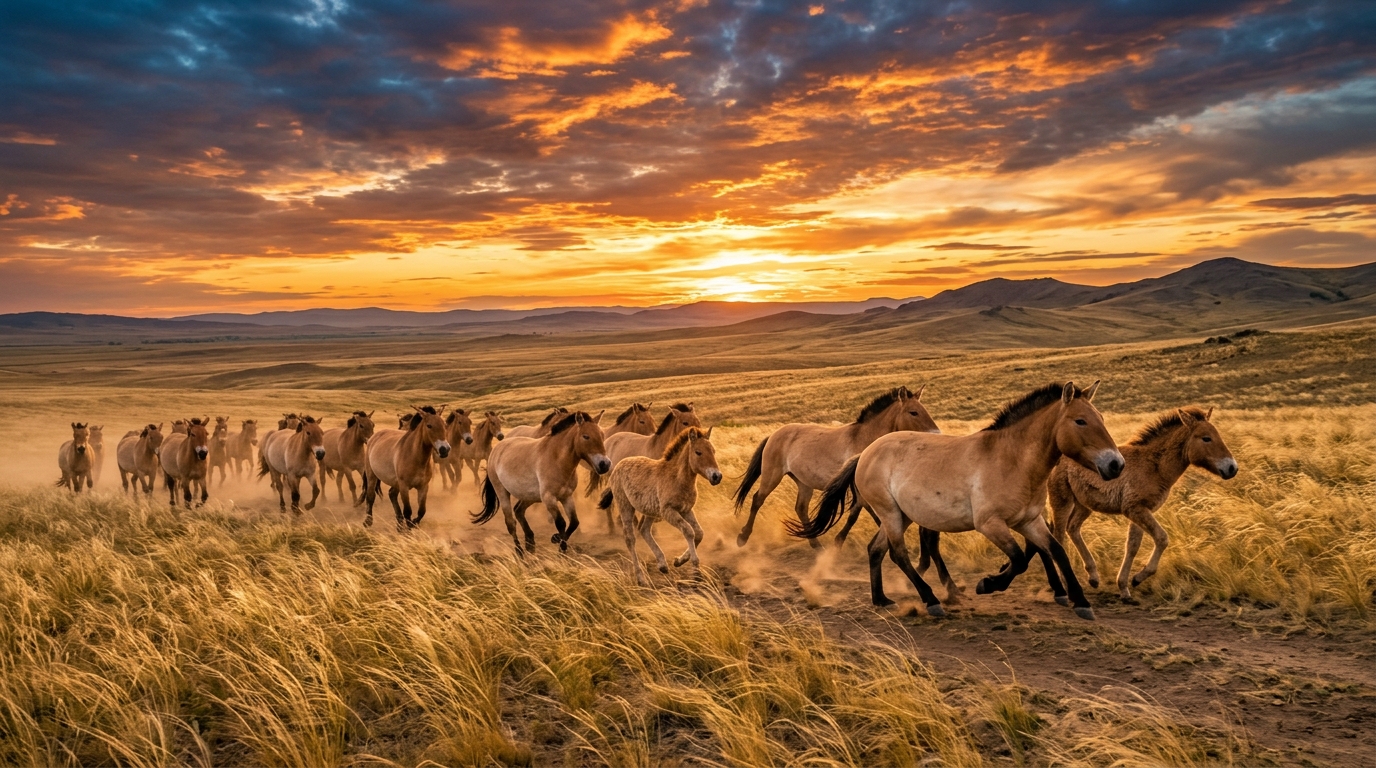
Unlike American mustangs, which descend from domesticated horses, the Takhi has 66 chromosomes (compared to 64 in domestic horses) and was never tamed. Reintroduced to Hustai National Park and Tachin Tal, visitors can watch free-roaming herds at dusk.
7. The Mongol Empire Invented the Ancient Pony Express (Örtöö)
In the 13th century, Chinggis Khaan and Ögedei Khaan established the Örtöö (Yam) relay system—a network of horse stations spaced one day's gallop apart, allowing royal messengers to cross thousands of kilometers in days and introducing one of the world's earliest diplomatic passports, the Gerege (Paiza).
8. Ulaanbaatar Is the World's Coldest Capital City
While summer temperatures in the Gobi can soar past 38°C (100°F), winter in Ulaanbaatar regularly plunges below -30°C (-22°F). Yet winter is also one of the most magical times to visit, featuring the Khövsgöl Ice Festival and the Thousand Camel Festival.
9. Four UNESCO Intangible Cultural Traditions
- Khöömii (Mongolian Throat Singing): Vocalists produce multiple pitches simultaneously, mimicking waterfalls, wind, and animals.
- Morin Khuur (Horsehead Fiddle): The two-stringed national instrument whose scroll is carved in the shape of a horse's head.
- Traditional Craftsmanship of the Mongol Ger: A portable wood-and-felt dwelling engineered to withstand steppe gales and assemble in under two hours.
- Coaxing Ritual for Camels: A moving musical ritual where herders play the fiddle and sing to help a mother camel bond with a newborn calf.
Traveler Tip: When visiting a nomadic family's Ger, never step on the threshold, walk clockwise around the central stove, and receive bowls of Suutei Tsai (salted milk tea) with your right hand—or both hands—as a sign of deep respect.